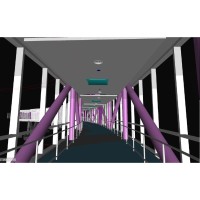
The Critical Role of Preconstruction Services in Hospital Projects
Best Practice Provided By: Barr & Barr Inc. Hospital projects are among the most technically complex and operationally sensitive facilities constructed today. Unlike many commercial projects, success cannot be measured solely by cost, schedule, and quality. Hospitals must support patient care, clinical workflows, life safety requirements, infection prevention measures, and rapidly evolving medical technology. For these reasons, preconstruction is not simply an early phase of the project; it is the

Before the Work Begins: The Importance of Pre-Shift Safety Meetings
Best Preactice Provided by: Jimmy Layman, ASP - Pointman Safety Consulting Every day on a construction site brings a new set of challenges. Work areas change, other trades move in and out, equipment is relocated, weather conditions shift, and the scope of work progresses. Yet too often, workers are sent into the field without having a meaningful conversation about what they are doing that day and the hazards they may encounter. It is easy to become complacent, especially when performing the same type of
Overhead in Construction: Best Practices
Best Practice Provided by: Shmulie Munitz - Munitz & Co.Ask ten AGC of Massachusetts contractor members what percentage they add to a bid for overhead, and you’ll get ten different answers. One goes with 10% because “that is what we have always done,” while another responds “15% is the industry standard.” A majority of them haven’t changed that number since their very first bid. In construction, a huge percentage of your top-line revenue never even belongs to you. In 2026, Siana reported that U.S.
Message from the Editor - Building Best Practices 2026 - Fall
By Tom Dunn, Esq. Pierce Atwood LLP Welcome to this edition of Building Best Practices. We have three articles that I think will resonate with anyone managing the business side of a construction company. I am pleased to contribute 5 Steps to Prompt Pay, which walks through practical compliance measures for the Massachusetts Prompt Pay Act in light of the Supreme Judicial Court's 2024 decision in Graycor and the 2026 decision in Cannistraro. Prompt pay statutes are driving daily decisions on construction
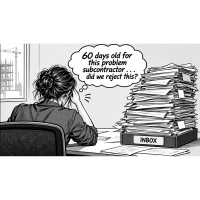
5 Steps to Consider Now to Comply with Massachusetts’ Prompt Pay Act
By Tom Dunn, Pierce Atwood LLP About the Author: Tom Dunn is a construction lawyer with over 20 years’ experience helping contractors prove-up, confront, mitigate, and resolve construction project payment, change order, and related claims and disputes in Massachusetts and Rhode Island. He leads the Construction Practice Group at Pierce Atwood LLP, a law firm with offices in Boston, Providence, Portsmouth, and Portland. As a long-standing member of the AGC of Massachusetts, he serves as Chair of the AGC

When Your Project is Put on Trial: What to Expect for the Contractor
By: R. Thomas Dunn, Esq. and Matthew R. O’Connor, Esq. As contractors, you may never imagine you could end up someday testifying under oath about the tenth email you sent on a random Tuesday years ago talking about an RFI, soil compaction, or who said what in a meeting with the project owner. Yet, that’s the reality of what happens when a dispute exits the worksite and enters a courtroom. Recently, the authors tried a multi-day arbitration involving millions in claims. There were twenty witnesses ranging

From the Field to the Front Office: Mentorship That Builds Confidence
From the Field to the Front Office: Mentorship That Builds Confidence In an industry where representation and inclusion are still evolving, the BuildHer Mentorship Program, launched by Building Women in Construction (BWiC), is more than a professional development initiative-- it’s a movement. BuildHer is redefining leadership by empowering women in commercial construction through meaningful communication, shared learning, and connection across generations.Building Confidence and Culture At its core,
Building Belonging: Advancing Diversity, Equity, and Inclusion Through Member Collaboration
By: Samilys Rodriguez, Director of Career Development & Industry Inclusion, AGC MA In the spring and summer of 2025, AGC MA partnered with Dr. Yaro Fong-Olivares, Ph.D., of Bentley University’s Gloria Cordes Center for Women in Business, to lead a dynamic series of dialogues exploring how recent political and social developments impact diversity, equity, and inclusion (DEI) across the construction industry. These sessions brought together a broad coalition of AGC MA members—contractors, owners, and

The new cyber threat landscape for construction firms
By Emily Selck - The Baldwin Group (Sr. Director, National Cyber Practice Leader) & Nick Coveney (Director, Baldwin Construction Practice) The rapid expansion of AI, the growth of megawatt-scale data centers, and the spread of connected technology across daily life have reshaped the cyber landscape. Cybercrime is now more prevalent, more sophisticated, and more disruptive, with attackers quickly adapting to bypass once-reliable safeguards. Combined with increasingly complex regulations, today’s
Safety Committee’s Implementation from the SAFE-T Survey
In the construction industry, safety is often measured in numbers such as incident rates, lost time, and reported near misses. However, a true safety culture runs much deeper than metrics. It should live in everyday conversations, behaviors, and decisions. This is how a true culture of safety is built. At Barr & Barr, our Safety Committee includes every level of the company—from C-suite members to field staff and everyone in between. This ensures our safety program is more than compliance-driven; it
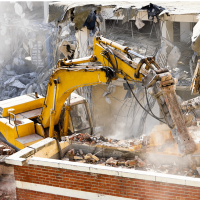
Building Smarter: Construction & Demolition Waste Management in Massachusetts
In Massachusetts, the construction industry has made steady progress in diverting materials from landfills, but there is still a long way to go. Every project — regardless of scope, size and program — generates waste that has both environmental and financial impacts. Effective construction & demolition (C&D) waste management is not only a regulatory requirement but also a way to reduce project costs, improve efficiency, and demonstrate environmental leadership in the industry. This article intends to